

Innovation - FloodAI
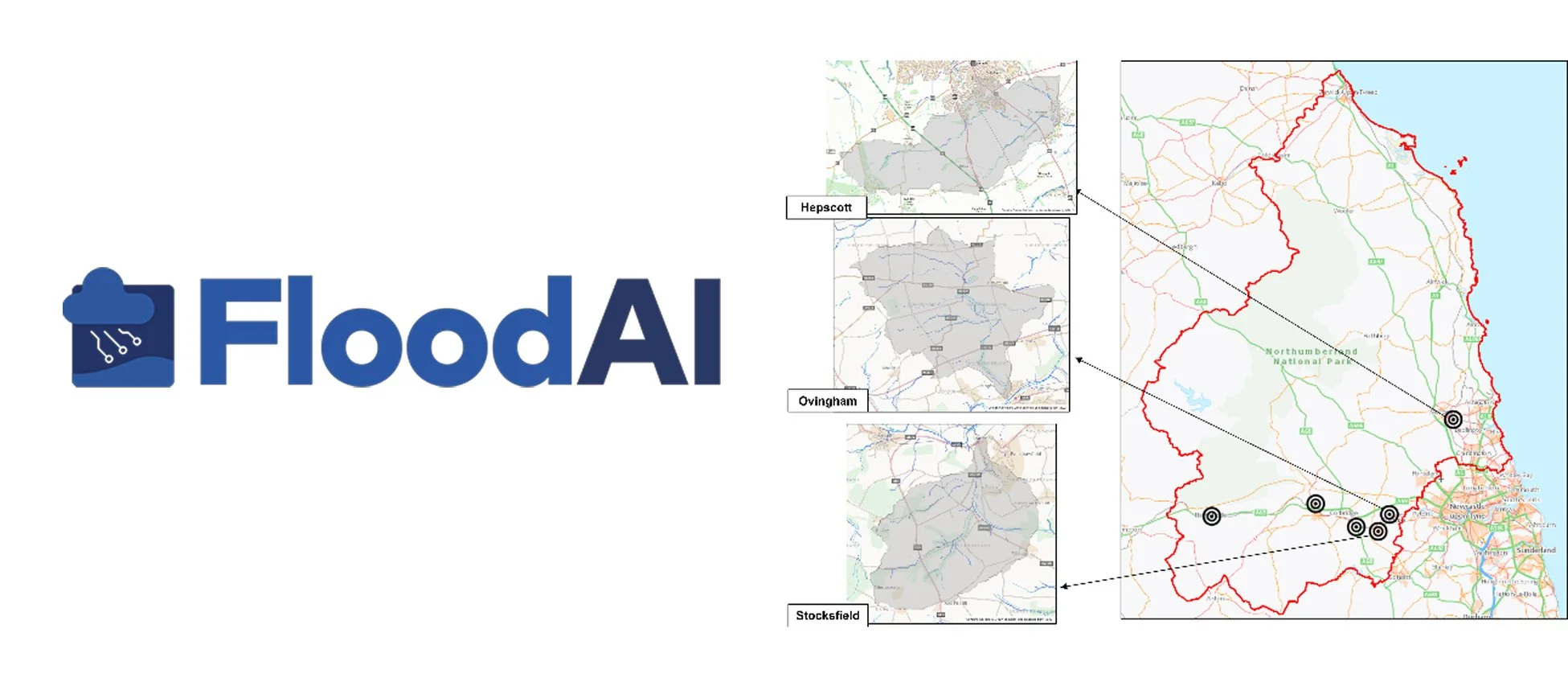
FloodAI is a pilot project trialling a flood prediction service in six Northumberland catchments vulnerable to flash floods. The localised, fast behaviour of these flashy catchments means traditional models cannot predict the flooding with enough time for communities to act on the warnings.
The project is managed by Northumberland County Council, in collaboration with Northumbria University, Arup, Isle Utilities, and the Environment Agency.
How is the project improving flood resilience?
The project is delivering technologically innovative and enhanced flood warning systems capable of providing specific, timely warnings for communities and responders isolated from existing services.
The project team have undertaken much engagement within local communities (e.g. workshop events) to seek their input into developing a flood prediction system which meets the needs of residents and responders.
What innovation does the project demonstrate?
The project has developed innovative AI flood prediction model tools which offer several advantages over traditional models. These AI models can automatically learn complex patterns and relationships from large datasets. This allows them to handle more diverse and dynamic inputs, such as real-time sensor data and climate projections. The sensors (recording soil moisture, rainfall and river levels) collect and transmit data from multiple points across the catchment.
Additionally, interpretability techniques have been used to help explain how the FloodAI model works. These techniques show how different factors influence the forecast to enable stakeholders to understand and trust the model’s predictions.
As a result, AI-based models can provide more accurate, adaptable, and understandable predictions, especially in environments where conditions change rapidly and traditional models struggle to keep up.
How will this pilot have long-term benefits for community flood resilience?
Through maintaining transparency about how AI could positively benefit residents, the project has gathered strong support from local groups.
Looking ahead, a key priority is ensuring the long-term success of FloodAI and informing the future development of flood risk warning services. With current funding secured through Defra until 2027, the council is proactively exploring various adoption pathways and sustainable commercial models to guarantee the project's continuation and positive impact on the community.
For further information about FloodAI:
Watch the project’s FloodAI video on YouTube
Keep up to date with the Flood AI Facebook page