

Climate survey highlights growing pressure on farm resilience as extreme weather becomes the norm
Recent NFU research has revealed the growing impact that changing weather patterns are having on farm businesses, with farmers reporting more frequent severe weather events, rising financial losses and an increasing need for practical support to build resilience. The survey, conducted between June and August 2025, gathered responses from 528 farmers across England and Wales and paints a clear picture of an industry adapting to increasingly unpredictable conditions.
The overwhelming majority of respondents said they had seen an increase in severe weather events during the past decade. Almost eight in ten (78%) reported an increase in severe weather events overall, while 70% had experienced more heatwaves and heat stress. More than two-thirds (68%) reported an increase in drought conditions and 56% had seen flooding become more frequent. Farmers described longer periods of both wet and dry weather, with traditional seasonal patterns becoming less predictable.
One respondent said: "Everything is getting extreme, hotter, colder, drier, wetter; we have lost the normal seasons."
Another commented: "It’s crazy, we had floods in 2024/25 followed by drought of 2025."
Two-thirds (66%) of farmers surveyed said they had experienced a severe weather event that directly affected their business in the last 10 years. Among businesses impacted, almost half (47%) reported financial losses exceeding £10,000, while 12% reported losses of more than £100,000. The average estimated financial loss across affected farms was £40,064. Examples included crops rotting in saturated fields, flood-damaged infrastructure, lost livestock productivity and prolonged periods where land became unusable. One farmer reported losing seven fields of wheat during the winter of 2023/24, resulting in losses of more than £40,000. Another described repeated flooding of their dairy parlour, noting they had experienced more flood events in the last three years than in the previous two decades combined.
The survey also highlighted the increasing burden flooding places on farm businesses. Flooding not only damages crops and productive land but also impacts infrastructure, business viability and environmental outcomes. Rural communities are increasingly on the frontline of extreme weather. Around 58% of England's highest-quality agricultural land lies within floodplains, while significant areas face coastal flood risks. Many respondents pointed to inadequate maintenance of rivers and flood management assets as a contributing factor to local flooding.
As pressures increase, many challenges associated with managing excess water will become too great to address at individual farm level alone.
Despite the challenges, the survey found that many farmers are already acting. Half of respondents said they had changed farming practices in response to severe weather events. Adjustments included altering crop rotations, reducing livestock numbers, investing in infrastructure and introducing natural flood management measures such as leaky dams, bunds and enhanced field margins. Importantly, more than half (55%) of those who had made changes reported improved resilience as a result. When asked what would make the greatest difference in preparing for future weather events, farmers identified practical measures such as improved field drainage, water storage, livestock shelter and business diversification. They also highlighted the need for greater flexibility in schemes and regulations, more responsive planning processes and access to more accurate weather information.
Farmers want to play their part in improving water quality, soil health and air quality while continuing to produce food. However, achieving these goals requires enabling regulation, planning frameworks and incentives that support investment and innovation. As climate pressures continue to grow, the survey demonstrates that farmers are willing to adapt, invest and innovate. But if the sector is to continue producing food, protecting the environment and supporting rural communities, it will need the right policy framework, infrastructure and long-term commitment from government and industry.
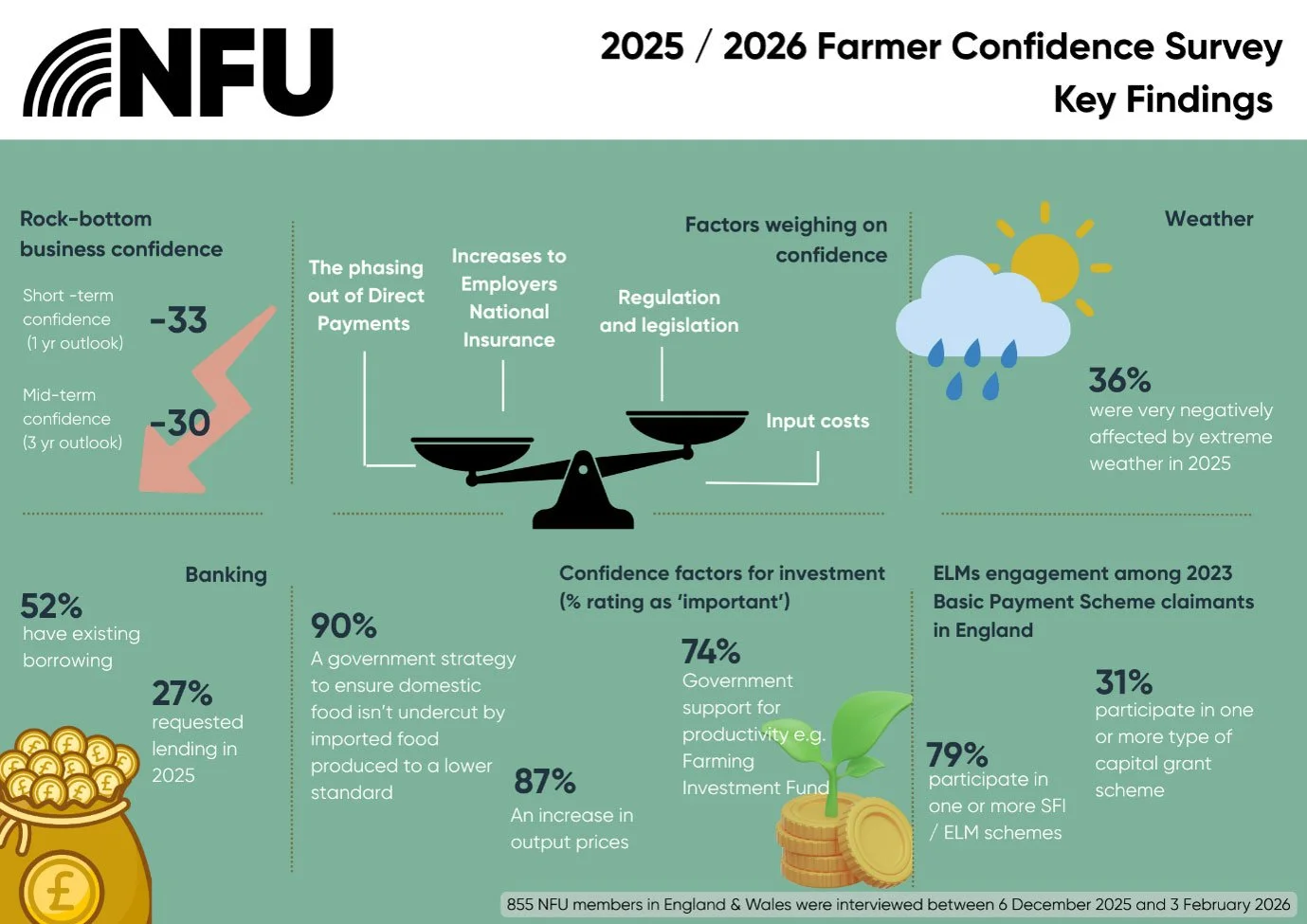
(NFU)